AI Customer Service Journey: Why Customers Are Moving Outside Your Support Channels
The AI customer service journey now starts outside company-owned chatbots. Support teams need to understand third-party GenAI behavior, human handoff expectations, and the customer signals that still reach owned channels.
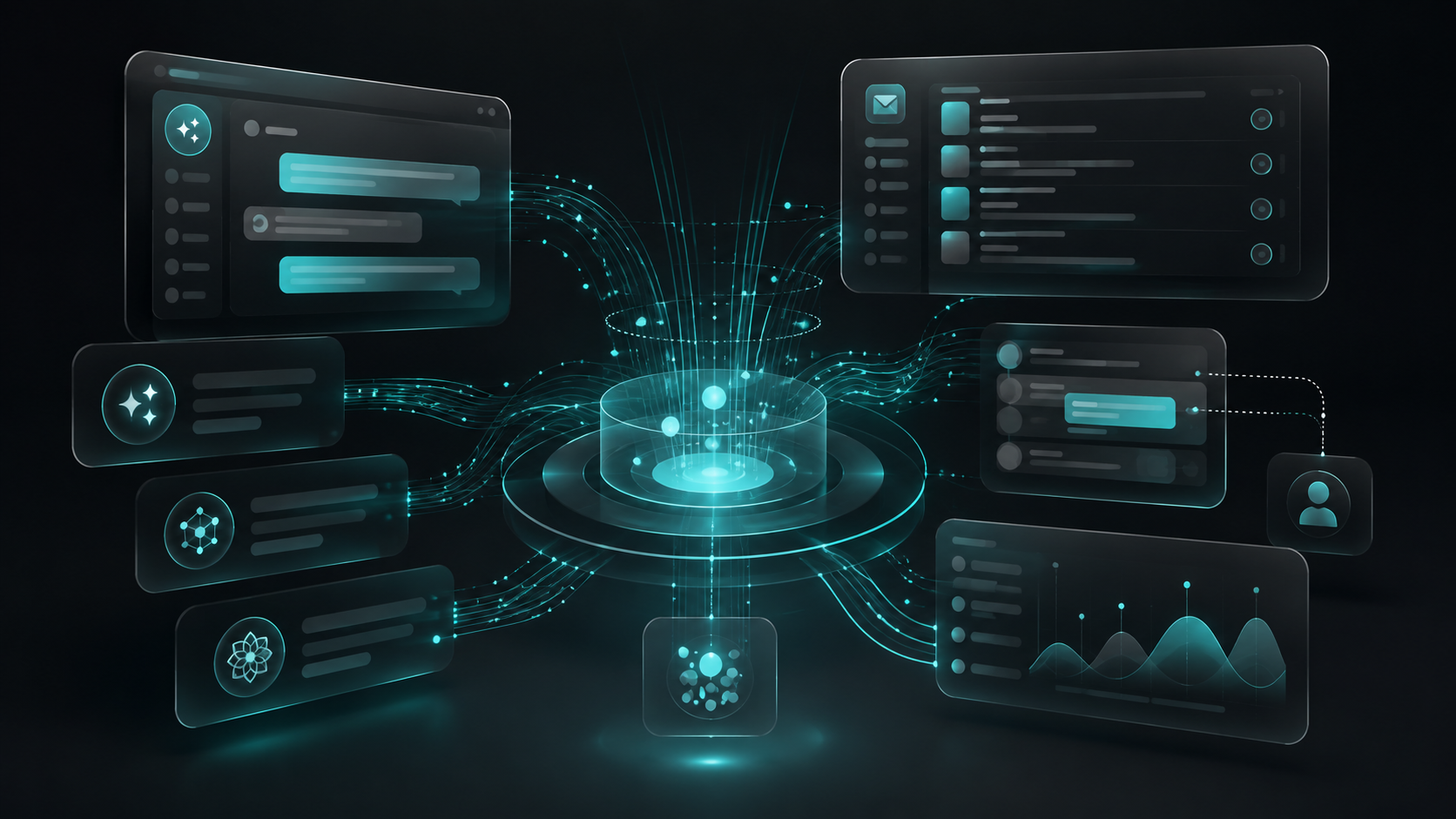
The customer service journey is no longer fully owned by the company.
That is the uncomfortable shift.
For years, support teams designed around the channels they controlled: help centers, chatbots, ticket forms, email, phone, in-app support, and customer success escalation paths. The customer had a problem, entered a company-owned channel, and the company could observe the interaction.
AI is changing that.
Customers now ask third-party AI tools to explain product issues, summarize policies, compare vendors, write escalation emails, debug workflows, and decide whether a problem is worth raising with support at all.
By the time they reach your team, they may already have tried three answers, formed an opinion, and decided how much they trust you.
That means support leaders need a new question:
Where does the AI customer service journey actually begin?
What is the AI customer service journey?
The AI customer service journey is the path a customer takes when AI helps them understand, resolve, escalate, or act on a product or service issue.
That journey can include:
- A search engine AI summary.
- A third-party GenAI assistant.
- A company help center.
- A company chatbot.
- A support ticket.
- A human agent.
- A customer success manager.
- Public reviews, forums, or community threads.
- Internal customer documentation created by the buyer's team.
The important change is that the journey may not start in your product or support center.
It may start in a generic AI assistant the company cannot directly observe.
That does not make owned support channels less important. It makes them more important. They become the moment when the company either recovers context, builds trust, and learns from the issue, or confirms the customer's suspicion that support is fragmented.
Why this is happening now
Customers are becoming more comfortable using GenAI for service tasks.
Gartner reported in July 2026 that customers are approximately three times more likely to use third-party GenAI tools than company-provided chatbots when resolving customer service issues. The same research found that customers increasingly expect AI to help them complete tasks, not just answer questions.
Pew Research Center's 2026 AI study gives the broader behavioral backdrop: about half of U.S. adults now use AI chatbots, and searching for information is one of the most common uses.
The customer behavior is clear. When people have a question, they increasingly ask AI first.
In B2B SaaS, that can mean:
- A user asks a chatbot how to solve a workflow issue.
- An admin asks AI to compare the product's permissions model with a policy requirement.
- A champion asks AI to draft a business case for renewal.
- A buyer asks AI whether a repeated support issue is common in the category.
- A frustrated customer asks AI how to cancel, switch, or escalate.
Some of those questions will never reach your support team.
The ones that do may arrive with more history than your system can see.
The risk: invisible customer effort
Customer effort used to be easier to observe.
If a customer searched your help center, opened a ticket, chatted with support, and escalated to a CSM, the journey happened mostly inside systems you could inspect.
Now, part of the effort may happen elsewhere.
The customer may:
- Ask a third-party AI assistant before contacting you.
- Copy your help-center text into a chatbot for explanation.
- Use AI to interpret your error message.
- Ask AI whether your support answer is reasonable.
- Generate a workaround instead of opening a ticket.
- Search public complaints before escalating.
- Draft a cancellation email with AI before your team knows there is risk.
That effort is invisible unless the customer mentions it.
This creates a measurement problem. A support dashboard may show a clean first response time and a normal ticket volume, while customers are doing more work outside the system before they ever appear.
The experience feels harder than your metrics suggest.
Human access is becoming part of AI trust
The point is not that customers reject AI.
The point is that they reject AI that traps them.
Gartner's August 2026 customer service survey found that 87% of customers say companies using GenAI for customer service must provide access to a human agent. Clutch's 2026 AI customer support report found that 67% of consumers have considered or stopped doing business with a company after a poor AI support experience, and many felt AI blocked access to a human.
That does not mean every customer wants a human first.
It means customers want choice, context, and a clear way out.
In a B2B setting, this is even more important because the issue often has business consequences. The customer may not be asking a simple question. They may be trying to finish implementation, unblock a stakeholder, justify renewal, or protect their own credibility internally.
If AI adds friction in that moment, the customer does not only lose time.
They lose confidence.
What support teams should measure differently
If the journey is no longer fully owned, support analytics need to evolve.
The team should still measure speed, resolution, cost, CSAT, and deflection. But those metrics need to be joined with signals that explain customer effort and trust.
1. Pre-contact context
When a customer reaches support, capture whether they already tried:
- Help center search.
- AI assistant.
- Company chatbot.
- Community or public search.
- Internal workaround.
- Prior ticket.
This can be detected through intake questions, conversation language, support notes, or AI analysis of the message itself.
Phrases like "I already asked AI," "your docs say," "I found a workaround," or "we tried everything" are not throwaway context. They are effort signals.
2. AI-originated confusion
Customers may arrive with a wrong or partial answer from a third-party AI system.
Track when support needs to correct:
- Misstated product behavior.
- Outdated instructions.
- Incorrect pricing or policy assumptions.
- Unsupported workflows.
- Confused integration steps.
- Overpromised automation.
These cases reveal where public documentation, help content, and category language may be too vague for AI systems to represent accurately.
3. Handoff quality
When the customer moves from AI to a human, the handoff needs to preserve context.
Measure:
- Did the human agent receive the customer's goal?
- Did the agent see what AI already tried?
- Did the customer need to repeat themselves?
- Did sentiment improve after handoff?
- Was the issue resolved faster after escalation?
Handoff quality is becoming a trust metric, not just an operational metric.
4. Escalation intent
Not all escalations mean the same thing.
Some customers escalate because the issue is complex. Some escalate because they do not trust the AI path. Some escalate because they are preparing for renewal, cancellation, or executive review.
Support teams should classify escalation intent:
- Complexity.
- Low confidence.
- Repeated failure.
- Commercial risk.
- Executive pressure.
- Security or compliance concern.
- Emotional frustration.
This helps the team route the issue to the right owner instead of treating every escalation as a queue problem.
5. Product and content gaps
Third-party AI behavior creates a new feedback loop.
If customers repeatedly arrive confused about the same workflow, the issue may not be only support quality. It may be:
- The product is unclear.
- The documentation is incomplete.
- The public explanation is ambiguous.
- The workflow conflicts with how customers think.
- The category language is being defined by someone else.
Support should route these patterns to product, documentation, customer success, and marketing.
How to design for the new journey
The new AI customer service journey needs more than a better chatbot.
It needs a support operating model that assumes customers move across tools, channels, and sources before they reach you.
Step 1: Treat owned support as a context recovery moment
When a customer arrives, the job is not only to answer.
The job is to recover context:
- What are they trying to accomplish?
- What have they already tried?
- What answer did they believe before contacting you?
- How much trust has already been lost?
- What business outcome is blocked?
This gives human agents and AI systems a better starting point.
Step 2: Make help content AI-readable
If customers and AI assistants are using your public content, vague documentation becomes a support risk.
Help content should clearly state:
- What the feature does.
- What it does not do.
- Required prerequisites.
- Supported workflows.
- Common failure modes.
- When to contact support.
- What information to include when escalating.
This is not only SEO. It is service design.
Step 3: Redesign AI-to-human handoffs
A good handoff should not feel like starting over.
It should carry:
- Summary of the issue.
- Customer goal.
- Steps already attempted.
- AI confidence level.
- Relevant product area.
- Account context.
- Sentiment and urgency.
- Recommended next action.
The human should enter with context, not apology.
Step 4: Connect support signals to product decisions
If third-party AI creates repeated confusion, product and marketing need to know.
Examples:
- Customers misunderstand the same feature boundary.
- AI assistants surface an outdated workaround.
- Buyers ask support to confirm claims from public sources.
- Users ask for a workflow the product does not support.
- Renewal-risk language appears after failed self-service.
These are not isolated tickets. They are market signals.
Step 5: Measure trust recovery
The question is not only "did we resolve the ticket?"
The better question is:
Did the customer regain enough trust to continue?
Measure:
- Sentiment movement.
- Repeat contact.
- Escalation outcome.
- Time to confirmed resolution.
- Customer effort.
- Renewal-risk language after the interaction.
- Product or documentation follow-up created from the issue.
That is how support moves from closing cases to protecting customer confidence.
The strategic shift: support is no longer the first touch
The AI customer service journey is becoming less linear and less visible.
Customers may start with AI, search, reviews, peers, internal docs, or public conversations before they enter your support system. That means the company-owned support interaction is no longer always the first touch.
It is often the trust test.
The companies that adapt will stop treating AI support as a standalone chatbot project. They will treat it as a customer intelligence problem:
- Where do customers start?
- What do they believe before they reach us?
- Which issues create invisible effort?
- Which handoffs protect trust?
- Which conversation patterns should change the product, docs, or success playbook?
If your team wants to understand the customer signals hiding across support, sales, success, and product feedback, book a Synthight demo. We will show you how to turn customer conversations into the intelligence layer behind better support journeys and stronger retention.
Keep reading
AI Customer Service Metrics: What to Measure Beyond Deflection
AI customer service metrics should prove whether customers get resolved, recover trust, and create useful product signals, not just whether tickets were deflected.
AI-to-Human Handoffs Are Becoming the New Trust Moment in Customer Experience
As AI agents handle more customer conversations, the handoff to a human is becoming one of the clearest signals of whether your CX operation is actually working.