AI Product Discovery: How to Trust Customer Insights Before They Shape the Roadmap
AI product discovery only improves roadmap decisions when every insight is traceable to real customer evidence, clear segments, and the conversations behind the recommendation.
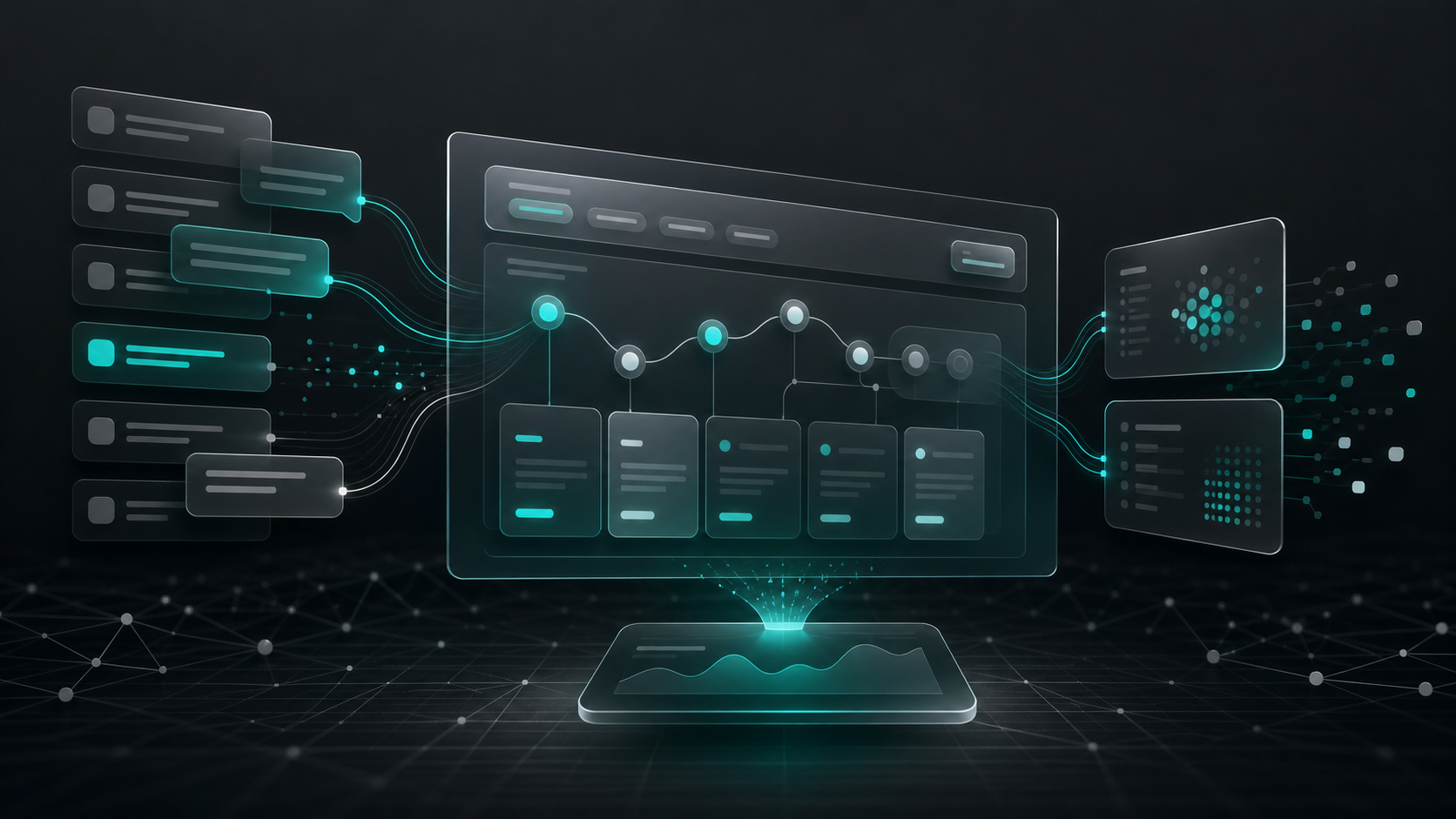
AI is making product discovery faster.
That is useful. It is also dangerous.
A product manager can now summarize hundreds of interviews, tickets, sales notes, reviews, and survey comments in minutes. A team can draft a PRD before lunch. Leadership can ask for "the top customer themes" and get a confident answer before the meeting starts.
The bottleneck is no longer synthesis speed.
The bottleneck is trust.
Can the team see where the insight came from? Can they separate a loud anecdote from a widespread pattern? Can they tell which segment is affected? Can they inspect the source conversation before a roadmap decision depends on it?
AI product discovery works when it compresses the distance between customer evidence and product judgment. It fails when it produces polished summaries that nobody can verify.
What is AI product discovery?
AI product discovery is the use of AI to collect, organize, analyze, and synthesize customer signals so product teams can decide what problems to investigate, prioritize, build, improve, or ignore.
The customer signals can come from:
- Support tickets and chats.
- Sales and success calls.
- Product feedback forms.
- User interviews.
- NPS, CSAT, and survey comments.
- Cancellation notes.
- Reviews and community posts.
- Usage and adoption data.
The point is not to replace product judgment. The point is to give product judgment better coverage.
Instead of manually reading a small sample of feedback, teams can analyze the full body of customer conversations. Instead of relying on whoever remembers the loudest quote, they can see which issues appear across accounts, segments, and workflows.
That is the promise.
But there is a catch: speed without evidence creates a new kind of roadmap risk.
Why AI changes the discovery problem
The 2026 product environment is defined by pressure. Atlassian's State of Product 2026 report, based on more than 1,000 product professionals, frames product work around tighter timelines, AI disruption, collaboration strain, and pressure to prove outcomes.
That pressure makes AI attractive. If teams can synthesize feedback faster, they can move faster.
But faster synthesis does not automatically create better decisions.
AI can collapse weeks of manual analysis into an afternoon. It can also collapse uncertainty into a confident-sounding recommendation that hides weak evidence.
Stanford HAI's 2026 AI Index highlights why this matters: in a new benchmark, hallucination rates across 26 top models ranged from 22% to 94%. That benchmark is not a product discovery test, but the lesson is relevant. AI systems can produce fluent answers that vary widely in factual reliability.
For product teams, the problem is not only hallucination. It is unverifiable synthesis.
Recent AI research points in the same direction. The 2026 ACL paper introducing PROBE breaks hallucination detection into steps such as claim decomposition, evidence finding, evidence evaluation, and localization. Product teams do not need an academic benchmark in their roadmap process, but they do need the same operating principle: separate the claim from the evidence before acting.
An insight can be wrong in several ways:
- It may overstate how many customers raised an issue.
- It may merge different problems into one broad theme.
- It may miss the segment where the pain is concentrated.
- It may treat a feature request as a root-cause problem.
- It may ignore business context such as ARR, lifecycle stage, or renewal risk.
- It may quote customers accurately but interpret their meaning poorly.
The answer may sound strategic. The evidence may still be weak.
The new rule: no insight without provenance
In AI product discovery, provenance means the team can trace every insight back to the customer evidence that produced it.
That evidence should answer:
- Which customers said this?
- Which accounts are affected?
- What segment do they belong to?
- Where did the signal appear?
- What exactly did the customer say?
- How often has the pattern appeared?
- How recently did it appear?
- What business risk or opportunity is attached?
Without provenance, a product insight is just a summary.
With provenance, it becomes something the team can inspect, challenge, and use.
This is especially important when AI is used to draft PRDs, opportunity briefs, roadmap notes, or customer evidence sections. A PRD that says "customers want this" should be able to answer the immediate follow-up: which customers, in what context, and why?
The four evidence layers every AI discovery workflow needs
The best AI discovery workflows do not treat all feedback as equal. They structure customer evidence into layers.
1. The raw conversation
The raw conversation is the source of truth.
It might be a support ticket, call transcript, survey comment, cancellation note, or chat conversation. The team should be able to open it from the insight.
This prevents the most common AI discovery failure: accepting the summary without checking whether the source actually supports it.
2. The interpreted theme
The theme translates raw language into a product-relevant pattern.
For example:
- "I cannot find the export button" becomes discoverability friction.
- "My team keeps asking me to resend the report" becomes collaboration workflow pain.
- "We only notice the issue at renewal" becomes churn signal visibility.
The theme should be specific enough to act on. "Onboarding problem" is too broad. "Admin permissions are unclear after workspace setup" is useful.
3. The segment and impact
Not every customer signal has the same product meaning.
A theme from ten enterprise accounts in onboarding may matter more than the same theme from three dormant free users. A request from a high-value segment may matter less if it conflicts with the product strategy.
AI discovery should enrich themes with:
- Customer segment.
- Account value.
- Lifecycle stage.
- Product area.
- Sentiment.
- Urgency.
- Renewal or expansion context.
- Frequency over time.
The goal is not to let a score make the decision. The goal is to make the decision context visible.
4. The decision record
Discovery should not end at "here are the themes."
It should connect to the decision:
- Build.
- Fix.
- Explore.
- Defer.
- Decline.
- Measure.
- Document.
- Escalate.
The decision record should explain why the team chose that path and what evidence supported it.
This matters because roadmap memory decays quickly. Three months later, teams often remember the decision but not the customer evidence behind it. That makes it harder to learn whether the decision was right.
How to evaluate an AI-generated product insight
Before an AI-generated insight shapes the roadmap, run it through a simple test.
Is the theme specific?
Weak: "Customers struggle with onboarding."
Better: "New admins cannot tell which integrations finished syncing during workspace setup."
Specific themes create clearer ownership, better product work, and better follow-up.
Is the evidence inspectable?
The team should be able to move from theme to source conversation in one step.
If the insight cannot show its evidence, it should not drive a roadmap decision.
Is the pattern segmented?
Ask who is affected.
Is this mostly:
- New customers?
- Enterprise accounts?
- Expansion-ready accounts?
- Admins?
- End users?
- Accounts with a specific integration?
- Customers in a particular lifecycle stage?
An unsegmented insight can create an overbuilt feature for the wrong audience.
Is the root cause clear?
Customers often request solutions. Product teams need to understand problems.
"Build a better dashboard" may really mean:
- The current report is hard to share.
- The user does not trust the data.
- The key metric is buried.
- The workflow requires manual export.
- The buyer needs executive-ready proof.
AI can help cluster requests, but product judgment still needs to separate symptom from cause.
Is there a business signal?
Not every issue should become roadmap work.
Look for signals such as:
- Churn risk.
- Expansion blocker.
- Time-to-value delay.
- Support volume.
- Implementation friction.
- Strategic segment relevance.
- Product adoption gap.
The strongest discovery insights connect customer pain to business impact without reducing product strategy to a spreadsheet.
Why evidence quality matters more as teams ship faster
AI-assisted development is changing the economics of product work. It is easier to prototype, test, and ship features quickly.
That raises the cost of bad discovery.
Mixpanel's July 2026 roadmap guide argues that as AI-assisted development makes it easier to build quickly, prioritization and alignment become more important because teams can now scale the impact of bad decisions faster.
That is the right framing. When shipping is slower, weak discovery wastes quarters. When shipping is faster, weak discovery can create a constant stream of confident but misaligned work.
The winning teams will not be the ones that generate the most AI summaries. They will be the ones that build the clearest evidence loop between customer reality and product decisions.
A practical AI product discovery workflow
Start with a workflow that keeps evidence visible.
Step 1: Gather the full customer signal
Pull from the channels where customers already explain their pain:
- Support conversations.
- Success notes.
- Sales calls.
- Product feedback.
- Surveys.
- Reviews.
- Churn notes.
The goal is coverage, not just volume. A thousand survey responses may miss what ten renewal-risk calls reveal.
Step 2: Cluster by problem, not request
Group feedback by the customer problem behind the words.
Do not stop at feature requests. A request is often the customer's proposed solution. The discovery value is in the underlying job, blocker, or risk.
Step 3: Attach source evidence
Every theme should include:
- Source conversations.
- Example quotes.
- Account list.
- Segment breakdown.
- Recency.
- Frequency.
- Sentiment or urgency.
If a theme cannot show its sources, label it as low-confidence.
Step 4: Review with product judgment
AI can surface patterns. Humans still own the tradeoffs.
Product, design, engineering, support, success, and sales should be able to inspect the same evidence and challenge the interpretation.
This is how AI improves alignment instead of creating another black-box dashboard.
Step 5: Connect discovery to action
For each validated theme, decide what happens next:
- Add to roadmap.
- Run discovery.
- Fix documentation.
- Improve onboarding.
- Update support playbooks.
- Create a success intervention.
- Monitor the signal.
- Decline with rationale.
The value of discovery is not the insight. It is the action the insight makes possible.
The future of product discovery is evidence-rich, not AI-first
AI-first discovery sounds modern, but it is the wrong goal.
The goal is evidence-rich discovery.
AI is valuable because it can read more customer conversations than any team can manually process. It can detect patterns across channels. It can surface hidden signals. It can make customer evidence available at the moment a decision is made.
But AI should not get a vote unless it brings the receipts.
Product teams do not need more confident summaries. They need customer insights they can trust, inspect, segment, and act on.
If your team wants to see what evidence-rich product discovery looks like across support, sales, success, and product feedback, book a Synthight demo. We will show you how the conversations you already have can become traceable product intelligence.
Keep reading
Validate Your Hypotheses Against Real Customer Data Before You Run Another Survey
Most product surveys and customer interviews start from a hypothesis the team has not yet tested. Here is how to use the conversational data you already have to filter out bad hypotheses before you spend a week of research budget on them.
AI Customer Feedback Analysis: How to Replace Manual Tagging Without Losing Trust
Manual feedback tagging is dead — but the wrong AI rollout will tank trust in your data. Here's the framework we use with product teams to migrate from spreadsheets to AI-driven feedback analysis the right way.